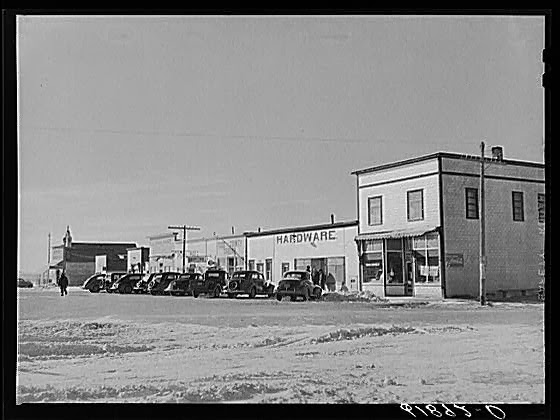
|
| Credit: Library of Congress |
As an author, when I sit down
to write a book-length piece of nonfiction, I normally have a point I want to
make.
I don’t think when I first
had the idea to start what would ultimately be a three-part series: The Last American Highway: A Journey Through Time Down U.S. Route 83, also known as The
Highway 83 Chronicles, that I had some overarching theme in mind.
I just thought it would be a
fun project to research and write. But that certainly changed as I began the
process.
Assign 100 authors to write a
hybrid travel-history book about the stories and people they discover along
Highway 83 and you would end up with 100 different books. That is because we
would all be personally drawn to different stories.
And one story I have been
drawn to for a number of years is that of Chief Spotted Tail of the Brulé
Lakotas.
One of the things I wanted to
accomplish in this book is to at least raise a little awareness about Sinte Gleska, as he is known in the
Lakota language. In my mind, he is one of the most fascinating and complex
historical figures of the 19th Century “Old West” era.
But few know of him. Why?
Take a poll of the public and
ask respondents to name five famous Native Americans. One could probably
predict the responses: Crazy Horse, Sitting Bull, Geronimo and Pocahontas would
probably be the top four, with number five up for grabs. (Cochise, Red Cloud or
Chief Joseph might make the cut.) I doubt Spotted Tail would be on the list
even if it were expanded to 10, or more.
We associate all but one of these
figures with resistance to the American expansion in the West. They were so-called “war
chiefs.”
Spotted Tail was not one of
them. I won’t recount the early days of his life. That is in the book, but I
will mention that as a young man he came to the realization long before his
contemporaries that the plains tribes would ultimately not win a straight ahead
war with the tidal wave of white men coming from the East. When his Oglala
Lakota rival Red Cloud fought a successful guerilla war on the Bozeman Trail in
1868, he sat that conflict out. He was nowhere near the Battle of Greasy Grass,
or “Custer’s Last Stand” in 1876.
He knew such conflicts would
get his people nowhere.
Yet he had many other kinds
of battles with the U.S. government. He was a tough negotiator, and wanted the
best outcome for his people. These were “wars of wills,” not with weapons. And
he mostly came out on top.
Americans always wished
Native American nations had an ultimate leader, like our own president — someone
who spoke for all of the tribes and could make decisions. But that wasn’t
normally how these societies worked. It was more about consensus among many chiefs.
Spotted Tail took on this
role, though. He went to Washington to negotiate, and could at least speak for
the Brulé Lakotas, although it was only one of seven different Lakota, or Teton
Sioux, tribes.
He was no pushover.
Highway 83 bisects the
Rosebud Reservation. The Highway 83 Chronicles project gave me a chance to do
something I had wanted to do for many years: tell Spotted Tail’s story. In the
final section of The Last American
Highway, I seek to answer the question of how the reservation and the Brulés
ended up where they are today.
The story is telling. For
several years, the agency was located along the banks of the Missouri, where it
was more convenient for the government to deliver supplies. Spotted Tail hated
this spot. Firewood and game — once plentiful along its banks — had been
depleted. It was easy for whiskey bootleggers to ply their trade there. And such
rivers were also a conveyance of diseases. The bureaucrats kept stalling a
planned move away from the river.
Spotted Tail pulled up the
stakes and moved everyone to where the town of Rosebud is today without the
U.S. government’s approving the site. Not all the Brulés wanted to leave the
Missouri, though. So he had his loyal men strong arm the others into
accompanying them. He had become the autocrat the Americans wanted him to be.
This created rivalries and jealousies in others, which led to his demise.
 |
| A marker honors the life of Spotted Tail along U.S. 83 in Mission, S.D. |
In a story not recounted in
my book, Spotted Tail was asked to send some of his children to the Carlyle
School in Pennsylvania so they could receive an education, At first, he thought
that a white man’s school would be beneficial. After a trip to Washington,
D.C., he stopped to visit. What he saw shocked him. The purpose of the school
was to transform Indian children into whites, not to provide them with an
education. Children who resisted were treated cruelly. It was brainwashing. He
yanked his kids out of the institution and brought them back to Rosebud despite
the angry denunciations from the school’s supporters.
Spotted Tail had in fact been
fighting to preserve Lakota traditions and walking a fine line between the two
cultures for years.
The American Indian Movement
and its sympathizers in the 1970s had disdain for Spotted Tail and Red Cloud,
who, after the Bozeman war, had come to the same hard conclusions about
resisting the U.S. government. They were called “treaty chiefs.” Sitting Bull
and Crazy Horse were right and those two men were white lackeys in AIM’s book.
(Leonard Crow Dog, one of the movement’s spiritual leaders, was a descendant of
the man who murdered Spotted Tail.)
I admire Crazy Horse and
Sitting Bull. But I admire Red Could and Spotted Tail equally as men who whose
peoples were put in a terrible situation. They guided them as best they could in
a time of traumatic upheaval in their society and resisted in their own ways.
Was Spotted Tail some kind of
saint or the Native American equivalent of Gandhi?
Certainly not. Ask the
Pawnees if he was a “man of peace.” He waged war against them every chance he had.
There are no Pawnees left in Nebraska. They moved to Oklahoma, and part of the
blame lies with Spotted Tail.
Spotted Tail’s life ends in
the Rosebud chapter of The Last American
Highway: The Dakotas, but not his story. There’s much more about him in the
Nebraska-Kansas book coming out next year.
Finally, a plea. Most of this
information on the life and death of Spotted Tail is derived from one book: Spotted Tail’s Folk by George Hyde,
which was published in 1961. The world needs an updated biography on this
fascinating man. I’m hoping a historian or author reads this column and takes
on this challenge.
 Stew Magnuson is the author of The
Last American Highway: A Journey Through Time Down U.S. Route 83: The Dakotas,
and The
Last American Highway: Nebraska Kansas Oklahoma edition. Both are available
online or in museums, bookstores and gift shops on Hwy 83.
Stew Magnuson is the author of The
Last American Highway: A Journey Through Time Down U.S. Route 83: The Dakotas,
and The
Last American Highway: Nebraska Kansas Oklahoma edition. Both are available
online or in museums, bookstores and gift shops on Hwy 83.
To join the Fans of U.S. Route 83 group on Facebook, CLICK HERE. And check out the U.S. Route 83 Travel page at www.usroute83.com. Contact Stew Magnuson at stewmag (a) yahoo.com